

Beach

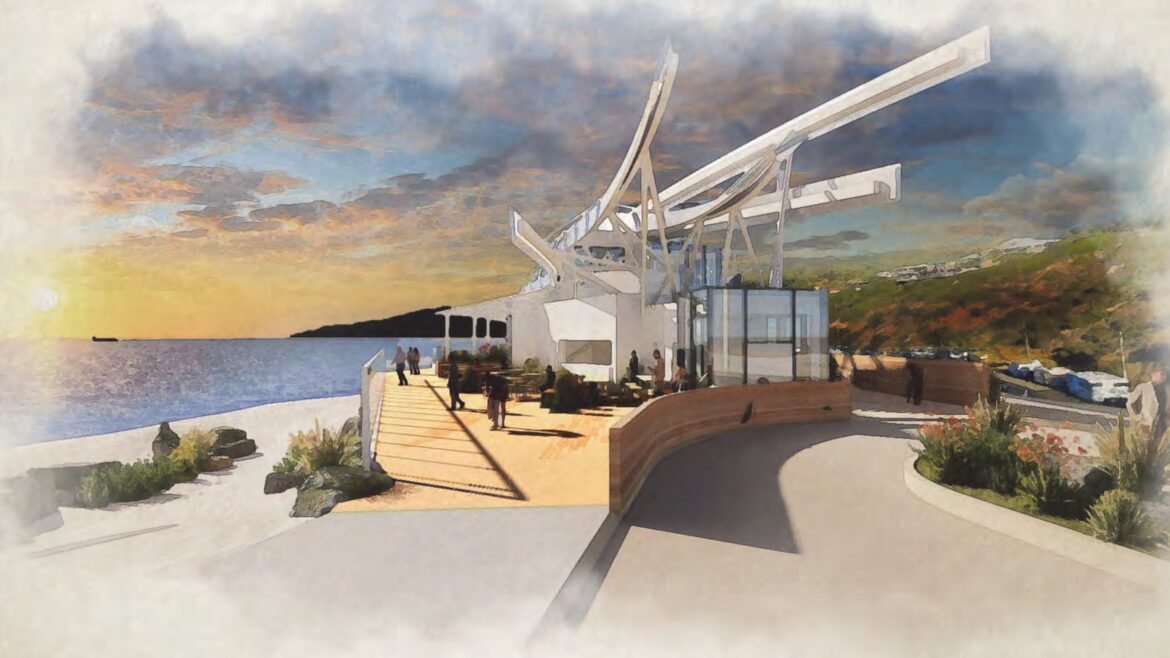
Watercolor rendering of the restaurant that will replace Gladstones at Will Rogers State Beach.
FACT SHEET: Gladstones Replacement Project: Iconic Design, Equitable Access 1024 586 Beaches & Harbors
FACT SHEET: Gladstones Replacement Project: Iconic Design, Equitable Access

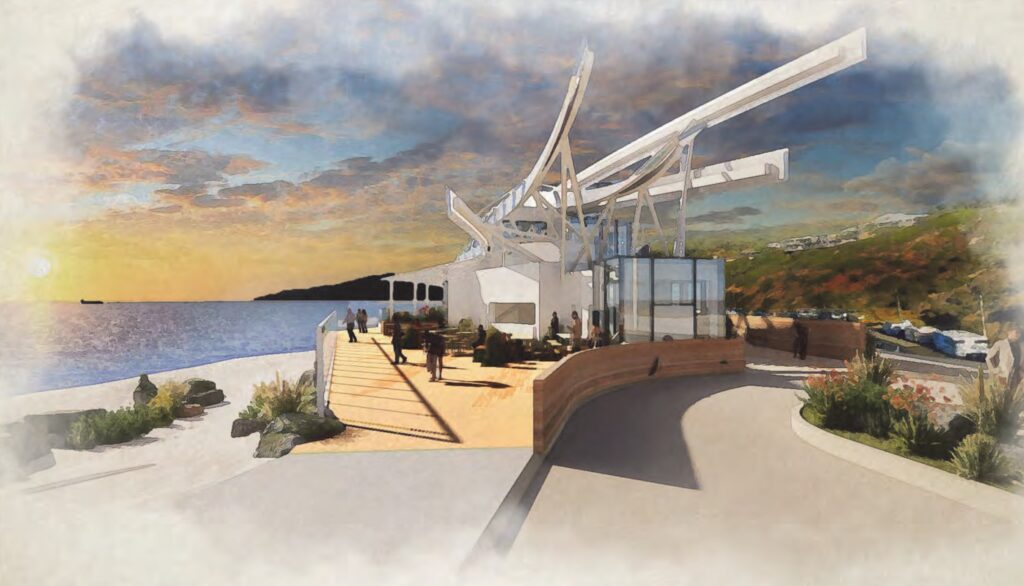
Watercolor rendering of the restaurant that will replace Gladstones at Will Rogers State Beach.

Gladstones Replacement Project: Iconic Design, Equitable Access

Published Oct. 7, 2025; Updated Oct. 8, 2025

The County of Los Angeles, in partnership with California State Parks and PCH Beach Associates, whose partners are Wolfgang Puck and Tom Tellefsen, is moving forward with a redevelopment of the Gladstones site at Will Rogers State Beach. The existing building will be removed and replaced with a new two-story restaurant designed by architect Frank Gehry and operated by Chef Puck.

This project represents a public-private partnership aimed at revitalizing a well-known coastal site while enhancing public amenities. In addition to the new restaurant, the updated facility will feature expanded public areas, new lower-cost offerings, and enhanced environmental safeguards—all of which will be reviewed in accordance with the California Coastal Act.

Public access is a core part of the project design. The redevelopment includes new and improved spaces that are open to everyone, regardless of whether they visit the restaurant.

Benefits

  • A 2,094 square foot public ocean-view deck with at least 100 seats available on a first-come, first-served basis—no purchase required.
  • Widened and lengthened segment of the Coastal Trail, improving mobility access and pedestrian connectivity along the beachfront.
  • A snack bar and gift shop offering snacks, beverages, and merchandise at moderate prices.
  • A turnaround and drop-off area to accommodate existing bus lines, improving safety and access without creating a new transit hub.

These amenities are designed to support everyday beachgoers—not just restaurant patrons.

Project size

Existing Proposed
Development footprint 19,991 square feet (including restaurant and patio) 14,200 square feet (restaurant, public deck, public restrooms, snack bar and gift shop)
Restaurant square footage 10,183 square feet (one-story restaurant building) 16,210 square feet (two-story restaurant building)
Restaurant height 40 feet 69.7 feet
Restaurant seating 707 seats 472 seats
Public deck 3,100 square feet (shared with restaurant) About 2,700 square feet* (dedicated for public; no restaurant table service)

*includes 600 square feet for public restrooms, snack bar and gift shop

Coastal trail 5 – 6 feet wide, 680 feet long 10 feet wide, about 1,160 feet long

Transportation improvements

  • To improve access and circulation, the project will reconfigure the 212-space beach parking lot to include a Big Blue Bus and Metro bus turnaround. This bus turnaround has been a required part of the project since the County issued its request for proposals to replace Gladstones in 2017.
  • The dedicated bus turnaround and relocated stop will support safe drop-off and pick-up for existing bus services carrying beachgoers, employees, and visitors. This small but functional addition is not a bus transit station, but rather a layover space to help reduce congestion and better integrate public transportation into the site.
  • With stacked parking via valet service, the reconfigured lot will fit up to 170 vehicles. Valet parking will be available for self-parkers at no additional cost when self-parking is unavailable.
  • Nearby County beach lots north and south of the site will also continue to provide ample parking for coastal access.
  • To support sustainable transportation, the project includes a Transportation Demand Management Plan. This plan requires the developer to cover the cost of monthly transit passes for employees who regularly commute by bus or rail and to implement strategies that reduce car dependence.
  • Finally, County parking revenue is reinvested into coastal access and recreation improvements—ensuring that funds generated here directly support inclusive beach access for the broader public.

Community outreach

This project has been shaped by years of public input, agency coordination, and oversight.

  • The Los Angeles County Board of Supervisors considered the project at three public meetings to advance the legislative, negotiation, and agreement phases.
  • The Beach Commission considered the project at 10 public meetings, with the most recent in March 2025.
  • A presentation on the project was also made in March 2025 at the Community Services Cluster meeting.
  • The County has provided substantive responses to inquiries from the Pacific Palisades Community Council (PPCC) about the project.
  • The PPCC considered the project at its public meeting on June 24, 2021.
  • PCH Beach Associates and County staff presented the project at a public outreach meeting on June 20, 2018, in Palisades Village. The event was publicized in the local newspapers as well as noted by the PPCC and attended by interested members of the public.

The County is committed to transparency and continued public participation as the project progresses.

This project reflects years of public input and a shared vision: a revitalized, welcoming coastal space that balances private investment with public benefit. From better access and expanded amenities to long-term reinvestment in recreation, the Gladstones site is being reimagined with the community at its heart.
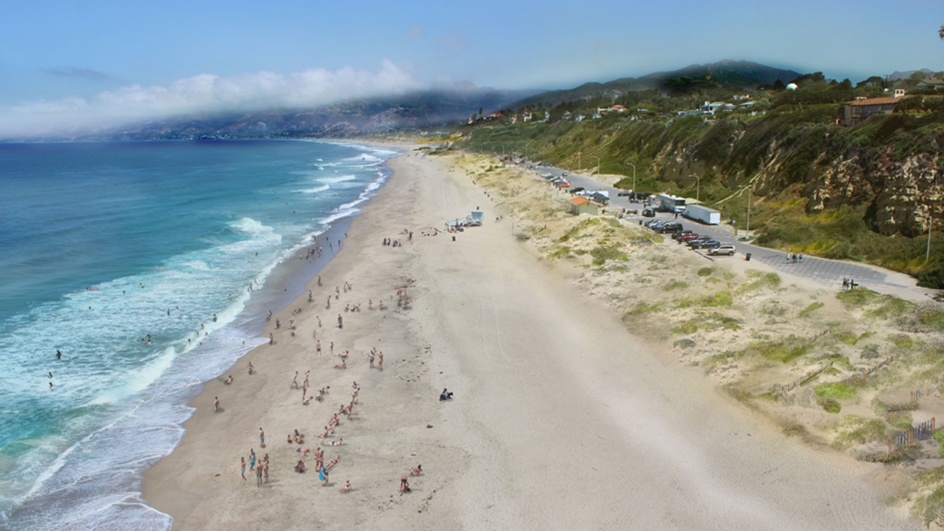
Artistic rendering of a widened beach with enhanced dune system
RELEASE: L.A. County Receives $5.1 Million to Advance Living Shoreline Projects 944 531 Beaches & Harbors

RELEASE: L.A. County Receives $5.1 Million to Advance Living Shoreline Projects

Lasting Impact: L.A. County Receives $5.1 Million to Advance Living Shoreline Projects

New nature-based efforts aim to protect beaches, expand coastal resilience, promote access for all L.A. County communities

Published Aug. 18, 2025

Coastal Resilience: Artistic Rendering of Dunes at Point Dume Beach following Project Completion

Artistic rendering of a widened beach with enhanced dune system

MARINA DEL REY, California — Projects to restore and protect Dockweiler, Zuma and Redondo beaches for future generations are moving ahead, thanks to $5.1 million in Measure A funds, the Los Angeles County Department of Beaches and Harbors (DBH) announced today.

“We’re working with nature to protect what matters most: the beaches that connect us, support our ecosystems, and serve our communities,” DBH Director Gary Jones said. “These projects reflect our commitment to resilience, preservation, and equity.”

The grant from the Regional Park and Open Space District (RPOSD) will fund the next phase of planning and design of “living shoreline” projects at each of the three beaches. DBH launched the projects in 2024 and is close to finishing a feasibility study that helped shape their design.

“Measure A was created by L.A. County voters to ensure every community has access to safe, healthy, and resilient public spaces,” said Norma E. García-González, Director of the County of Los Angeles Department of Parks and Recreation and Director of the Regional Park and Open Space District. “These living shoreline projects are a powerful example of how we can work with nature to protect our coast, strengthen climate resilience, and preserve public beach access for generations to come. By investing in science-based, community-driven solutions, we’re making sure our coastline remains a place of connection, recreation, and refuge for all.”

Living shoreline projects use native plants to restore dunes and shoreline habitats that naturally protect the coast from rising seas and stronger storms. By protecting the coastline, the projects will also ensure public access to the beach—especially for families and communities who rely on these spaces for relaxation, recreation and relief from extreme heat—for years to come.

RPOSD approved over $5 million in Measure A funding for the planning and design phases of three projects:

Redondo Beach Living Shoreline Project, Redondo Beach: $1.7 million

Widen the beach between the Redondo Beach Pier and Topaz groin and create new dune habitat

Dockweiler State Beach Living Shoreline Project, Playa del Rey: $230,000

Add low sand barrier along the bike path to keep sand out of parking lots and restore and enhance existing dune habitat by installing sand fencing, removing non-native species, seeding with native plants, and building new access paths

Zuma Beach Living Shoreline Project, Malibu: $3.1 million

Widen the beach, create new dune habitat, and enhance existing dune habitat. Sand placed at Zuma Beach is expected to naturally migrate downcoast and widen Point Dume Beach.

Each project will now move into design development and environmental review, with an aim to start construction in the coming years. Community engagement will be a key part of the process—including public meetings, email updates, and presentations to local groups—to ensure transparency and help shape the design of each project.

The living shoreline projects are key pieces of DBH’s broader Coastal Resilience Initiative to protect beaches through science, partnerships and public participation.

To learn more about the County’s Coastal Resilience Initiative and living shoreline projects, sign up for email updates about project milestones and community engagement opportunities. Join us in building a more resilient L.A. County coastline at our Coastal Resilience webpage.

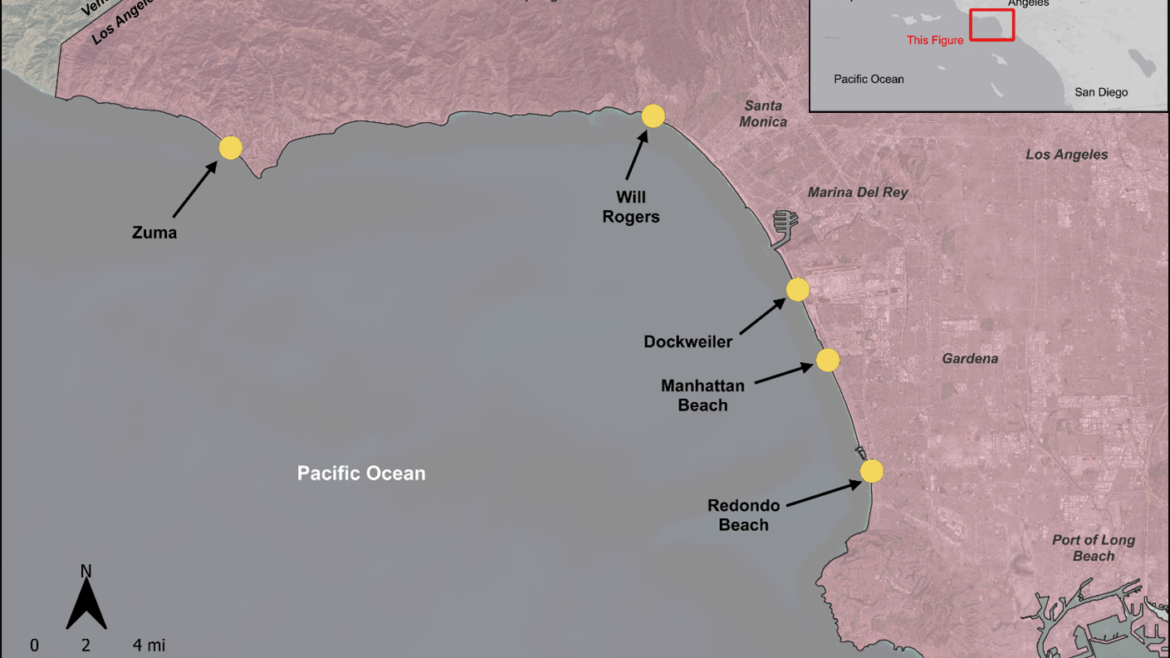
Map of LA County coast with arrows and yellow dots marking sites for the Sand Compatibility and Opportunistic Use Program
RELEASE: County Approves Sand Reuse Plan to Protect L.A. Beaches 1024 720 Beaches & Harbors

RELEASE: County Approves Sand Reuse Plan to Protect L.A. Beaches

County Approves Sand Reuse Plan to Protect L.A. Beaches

Published Aug. 13, 2025

MARINA DEL REY, California—A plan to allow the Los Angeles County Department of Beaches and Harbors (DBH) to use sand that may have otherwise gone to a landfill for beach nourishment is moving forward with the L.A. County Board of Supervisors’ unanimous approval of the Sand Compatibility and Opportunistic Use Program (SCOUP).

Map of LA County coast with arrows and yellow dots marking sites for the Sand Compatibility and Opportunistic Use ProgramOnce approved by regulatory agencies, the L.A. County SCOUP will remove the lengthy permitting and approval process for small beach nourishment projects that meet the program’s criteria.

“The diminishing amount of sand on our beaches is one of the many negative factors of climate change impacting our shoreline,” said Supervisor Holly J. Mitchell, whose Second District includes Dockweiler, Manhattan and Redondo beaches. “SCOUP helps the County address this challenge with cost-effective, nature-based solutions to replenish the sand our beaches need, while supporting the County’s commitment to keeping our beaches accessible to everyone.”

While coastal erosion is a natural process, climate change is making it worse. Higher sea levels and stronger storms wash away sand faster than before. Man-made structures like dams and sea walls also play a role.

Dams hold back sediment that would normally flow to the coast. Sea walls, which are often built to protect homes near the beach, can cause sand to erode more quickly by changing the way waves hit the shore. As sand disappears faster than new sediment arrives, beaches shrink, and the natural buffer that protects roads, buildings, and public spaces fades away.

“Our coastline is beloved by our community—a place where Angelenos gather, cool off, and enjoy the outdoors,” said Supervisor Lindsey P. Horvath, who represents Malibu as part of the Third District. “Los Angeles County is leading the way to protect our coastline using innovative strategies that address multiple challenges at once. By creatively tackling one problem—like reducing sediment in reservoirs—we can also protect our communities from sea level rise. This kind of integrated thinking helps build a stronger, more resilient future. When we act urgently, we make sure our coast remains open to everyone for years to come.”

SCOUP nourishment projects will restore sand to beaches that serve as a critical buffer between the ocean and vital public infrastructure.

Under the program, beach-quality sand left over from development, dredging and flood control maintenance may be used for small projects to nourish the following beaches:

  • Zuma Beach, Malibu
  • Will Rogers State Beach, Pacific Palisades
  • Dockweiler State Beach, Playa del Rey
  • Manhattan Beach, Manhattan Beach
  • Redondo Beach, Redondo Beach

These beaches were chosen using several criteria, including coastal erosion and flood risk, public infrastructure and amenities, and recreational and economic benefits, among others. These sites are also popular destinations for people from diverse inland communities. Preserving these beaches is vital to coastal access for all Angelenos.

The California Coastal Commission will next review the program for a coastal development permit. The program will also require approval by the California State Lands Commission, U.S. Army Corps of Engineers and the L.A. Regional Water Quality Control Board.

“We’re deeply appreciative of the Board’s commitment to protecting our beaches for future generations,” said DBH Director Gary Jones. “SCOUP gives us a sustainable, natural way to protect our beaches—not just for future generations, but for the communities who depend on them today. It’s a step that balances nature and access.”

SCOUP is a key component of DBH’s Coastal Resilience Initiative, a multi-pronged strategy that works to protect local beaches for future generations through nature-based solutions and partnerships with regional stakeholders.

To learn more about the County’s Coastal Resilience Initiative and SCOUP, sign up for emails about project updates and community engagement opportunities, and find out how to be part of building a more resilient L.A. County coastline, visit our Coastal Resilience webpage.

LA County seal and Beaches & Harbors logo
Beaches Reopen After Tsunami Advisory is Lifted 1024 717 Beaches & Harbors

Beaches Reopen After Tsunami Advisory is Lifted

FOR IMMEDIATE RELEASE

Beaches Reopen After Tsunami Advisory is Lifted

Published July 30, 2025

Los Angeles County beaches are open Wednesday morning after the U.S. Tsunami Warning Center lifted its tsunami advisory for the West Coast.

The L.A. County Department of Beaches and Harbors is opening restrooms, accessways and parking lots at beaches it manages, as well as parking lots in Marina del Rey, hours earlier than anticipated. The Dockweiler RV Park is also open.

While the beaches are open, visitors should check with the nearest lifeguard for information on current conditions and practice good judgment before entering the water.

Beach camp operators should check with lifeguards before any in-water activity.

LA County seal and Beaches & Harbors logo
Stay away from beaches, Marina del Rey until at least noon on Wednesday 1024 717 Beaches & Harbors

Stay away from beaches, Marina del Rey until at least noon on Wednesday

FOR IMMEDIATE RELEASE

Stay Away From Beaches, Marina del Rey Until at Least Noon on Wednesday

Published July 30, 2025

UPDATE: BEACHES OPEN AFTER TSUNAMI ADVISORY LIFTED

Visitors should check with the nearest lifeguard and practice good judgment before entering the water. Learn more.

A tsunami advisory is in effect for Los Angeles County beaches and Marina del Rey, with the first waves expected around 1 a.m. on Wednesday, July 30. The waves of 1 foot or less are expected to last at least nine hours, according to the U.S. Tsunami Warning Center.

People should stay away from beaches, harbors, marinas and waterways due to strong waves and currents. They should also avoid jetties, piers, boat docks and waterfront walkways.

The L.A. County Department of Beaches and Harbors (DBH) is taking these steps to get ready for the tsunami’s impact:

  • Keeping beaches, beach restrooms, beach accessways and parking lots closed until at least noon Wednesday
  • Moving DBH trucks, tractors and other heavy equipment to higher ground
  • Pulling DBH vessels out of the water when possible
  • Contacting Marina del Rey lessees and working with the Marina del Rey Harbor Patrol to make sure Marina residents are aware of the advisory
  • Canceling events sponsored by DBH, beach camps and other permitted activities on DBH-managed beaches that are scheduled for Wednesday morning

Guests at the Dockweiler RV Park have been advised to more to higher ground. DBH is working to provide alternate parking.

DBH is also supporting preparation efforts by the L.A. County Sheriff’s Department and its Harbor Patrol, the L.A. County Fire Department and its lifeguards, and the L.A. County Office of Emergency Management.

For the latest updates:

  • Sign up for real-time alerts at Alert.LACounty.gov.
  • Follow local news and official County channels.

An advisory is the middle tier of the Tsunami Warning Center’s alert system. It means that residents should stay away from beaches and coastal areas because of the possibility of flooding and dangerous currents.

Marina del Rey Turns 60—and Everyone’s Invited 150 150 Beaches & Harbors

Marina del Rey Turns 60—and Everyone’s Invited

Marina del Rey Turns 60—and Everyone’s Invited

Marina Culture Jam will feature performances, historic harbor tours, interactive drum circles, and resource fair to celebrate the Marina’s anniversary.

MARINA DEL REY—May 20, 2025—The Los Angeles County Department of Beaches and Harbors (DBH), in collaboration with The Music Center and Los Angeles County Supervisor Holly J. Mitchell, will host Marina Culture Jam, a community celebration on Saturday, May 31, 2025, from 11 a.m. to 4 p.m. at Burton Chace Park.

This free event is part of DBH’s year-round recognition of Marina del Rey’s 60th anniversary, reinforcing the County’s commitment to community, culture, and equity through its Marina del Rey for All initiative.

“For 60 years, Marina del Rey has been a harbor for connection, commerce, and appreciation of the natural beauty and marine life that define our coast. Our year-long celebration of this milestone is about uplifting our vibrant Marina del Rey community and welcoming residents from across L.A. County to be part of its bright future,” said Supervisor Holly J. Mitchell, who represents Marina del Rey in Los Angeles County’s Second District. “I’m proud to be part of this celebration and to help ensure a Marina del Rey for all to enjoy for years to come.”

The day will feature a vibrant lineup of internationally recognized performers and grassroots talent, including TAIKOPROJECT, the acclaimed Japanese-American taiko drumming ensemble, and INCA, the Peruvian Ensemble known for its joyful celebration of Andean heritage. Attendees can enjoy participatory drumming with Freedom Drum Circles with Christopher Ramirez, live DJ sets, interactive art stations, historic harbor tours, $1 WaterBus rides, lawn games, giveaways, and resource booths focused on wellness, the environment, and County services.

“We want families from Boyle Heights, South L.A., the San Fernando Valley, and beyond to know: Marina del Rey belongs to you, too,” DBH Division Chief Catrina Love said. “Culture Jam brings diverse communities together by expanding access so everyone can create lasting memories in L.A.’s Marina.”

Marina Culture Jam kicks off this summer’s series of free community events, where all L.A. County residents are invited to discover and explore the Marina through cultural performances, food, and other fun activities.

Join us at Marina Culture Jam and be part of a celebration where culture meets the coastline. Whether a longtime local or a first-time visitor, you’re invited to discover why Marina del Rey is for all of us.

Details

Date: Saturday, May 31, 2025
Time: 11 a.m. – 4 p.m.
Location: Burton Chace Park, 13650 Mindanao Way, Marina del Rey
Admission: Free
Learn more: beaches.lacounty.gov/marinaculturejam

Photo showing natural sand berms created by storm erosion at Zuma Beach
Los Angeles County Secures $1 Million Grant to Bolster Beach Resilience 1024 682 Beaches & Harbors

Los Angeles County Secures $1 Million Grant to Bolster Beach Resilience

Los Angeles County Secures $1 Million Grant to Bolster Beach Resilience

Funding will help LA County protect 45 miles of coastline from sea level rise to ensure access for everyone.

Los Angeles, California — Dec. 19, 2024 — Los Angeles County will receive $1 million from the California Ocean Protection Council (OPC) to advance coastal resilience efforts to protect the County’s iconic beaches from climate change-accelerated erosion threats, the Department of Beaches and Harbors (DBH) announced today.

The OPC governing board voted unanimously on Dec. 10 to provide the much-needed grant of state funds to preserve the County’s public beaches. The money from the OPC’s Sea Level Rise Adaptation Planning Grant Program, which aims to equip California’s coastal communities with the tools needed to combat climate threats, will support the development of the County’s Regional Coastal Strategic Adaptation Plan (RCSAP). The plan is a collaborative effort to protect 16 County-operated beaches, as well as State and local resources, along 45 miles of world-renowned coastline from threats posed by sea level rise and climate change.

“This grant allows us to build on our existing Coastal Resilience Initiative and take a significant step toward ensuring that LA County’s beaches remain resilient, accessible and sustainable for future generations,” DBH Director Gary Jones said. “We’re proud to collaborate with community stakeholders and experts in the field of coastal resilience to find solutions that address climate impacts while promoting equity, inclusivity and sustainability.”

Erosion that robs beaches of sand occurs naturally, but its effects are accelerated by dynamic weather patterns spurred by climate change. In LA County and other parts of the State, the resulting powerful storms and heavy wave action have reduced the size of some beaches and increasingly threatened public beach access and amenities and other essential coastal infrastructure.

In LA County, Zuma Beach loses approximately 3.6 feet of shoreline annually, Dockweiler erodes at a rate of 4.5 feet per year, and Redondo Beach faces narrowing challenges exacerbated by infrastructure disruptions. These findings underscore the urgent need for proactive coastal resilience measures.

“This funding secured from the state represents a major step forward in protecting and preserving our coastline for generations to come,” said Third District Supervisor Lindsey P. Horvath. “With this vital partnership, we will advance the County’s RCSAP, including design and robust community engagement for living shoreline projects across LA County. These efforts will protect our beaches and address the growing threats of climate change.”

The RCSAP is part of DBH’s Coastal Resilience Initiative, which aims to tackle these pressing challenges systematically by leveraging local, State and Federal resources and deploying nature-based strategies, while fostering collaboration with partners and stakeholders to ensure a sustainable coast that adapts to serve current and future generations.

“This project exemplifies how targeted investments can have far-reaching impacts, from protecting vital ecosystems to ensuring safe, inclusive access to all residents,” said Second District Supervisor Holly J. Mitchell. “It’s a win for our environment, economy, and communities.”

Building on the foundational work of DBH’s 2023 Coastal Resilience Study, the RCSAP will integrate cutting-edge solutions, including living shorelines, sediment reuse and enhanced shoreline management strategies.

“Tropical Storm Hilary last year and the extreme rains this year drove home that there is no time to bury our heads in the sand about the impacts of climate change across LA County,” said Fourth District Supervisor Janice Hahn. “It’s up to us to take action against the threat of coastal erosion. This grant is going to help us protect our beloved beaches for years to come.”

The RCSAP will engage a broad coalition of stakeholders, including municipal partners, tribal organizations, community advocates and regional agencies. These partnerships will help design and implement strategies tailored to the unique challenges and opportunities of LA County’s diverse coastal communities.

Highlights of the RCSAP include:

  • Community and Equity Focus: The project prioritizes equitable beach access for all, with a major focus on preserving coastal access for members of underserved inland communities disproportionately affected by extreme heat and limited recreational opportunities. The planning process will incorporate robust stakeholder engagement to ensure that diverse community voices shape the strategies for a sustainable coastline.
  • Holistic Approach: The RCSAP will go beyond piecemeal solutions and consider how projects will benefit beaches in the Santa Monica Bay as a whole. This holistic approach, combined with the plan’s focus on long-term sustainability, will ensure that the County’s beaches remain accessible, resilient and vibrant for years to come.
  • A Collaborative Future for California’s Coastline: The RCSAP is part of a larger statewide effort to build resilience against sea level rise, supported by the OPC’s Sea Level Rise Adaptation Planning Grant Program. By leveraging state funds and aligning with California’s sea level rise adaptation goals, DBH continues to set the standard for regional collaboration and innovative coastal management.

The RCSAP will be implemented over two years, with an initial on stakeholder engagement and data collection. Subsequent phases will develop actionable strategies and implementation pathways to build long-term resilience. To ensure transparency and accountability, key updates will be shared with the public and stakeholders throughout the project.

For more information on DBH’s work on coastal resilience, visit beaches.lacounty.gov/coastal-resilience.